 ]
]






|
SONGWRITING ARTICLES INDEX NEW - 1] IDEAS for the BRIDGE of a SONG by Art Rock / MyCD.ca NEW - 2] SONG OUTRO IDEAS / SONG ENDING IDEAS by Art Rock / MyCD.ca 3] SONG STRUCTURE- in layman's terms by Art Rock MyCD.ca 4] SONG TOPIC IDEAS by Art Rock / MyCD 5] SINGLE NOTE BASS LINES by Art Rock / MyCD 6] WALKING BASS LINES by Art Rock / MyCD 7] SING IT LIKE YOU MEAN IT by Art Rock MyCD.ca 8] SONG INTRO IDEAS by Art Rock MyCD.ca 9] WHAT IS A MEASURE, WHAT IS A BAR IN MUSIC - by Art Rock - MyCD 10] HOW IS TEMPO, BPM CALCULATED - by Art Rock - MyCD NEW - 11] HOW DO YOU FIGURE OUT HOW LONG THE SONG WILL BE? - by Art Rock - MyCD
|
1] NEW -
IDEAS FOR THE BRIDGE OF A SONG
by Art Rock / MyCd.ca
|
| PLACE YOUR AD HERE contact: web @ mycd.ca |
-------------------------------------------------------------
slowly falls down to zero. There is a fade out ending option on many recorders and recording software. If you
don't have that you can easily pull the master fader down on the final mixdown to your wave file or CD or whatever
you are mixing down to.
A variation is to pull down the music faster than the vocals while the Vocalist holds the last note.
2] A sudden stop
style ending. Usually on a chord with all instruments hitting the
final beat. If it is the last
strike of the chord, a large pause before hitting that last chord can give some anticpation to an ending and
finalization.
3] The one or two
bar and hard end is another variation on the sudden stop ending.
One way is to hit the last
chord, then pause, then hit it three more times. On some songs you will hear them hitting it many more times
than that.
Another variation is to pause then play the the next chord above or below, one to three times, then end back
on the same chord the chorus would normally end on.
4] An all out
instrumental free for all style ending is a very popular style of
ending. The drummer doing lots of
rolls and pounding on the cymbals, the other instruments playing solo lead style fast and crazy. Lots of fast
riffs and trills, lots of power chords. All the instruments playing full blast.
5] A double Chorus
ending, or even a triple Chorus. If you sang the lyrics in the
Chorus four times on each
Chorus throughout the song you do it eight times at the end, maybe even twelve if the chorus lines were
short enough that you won't sound like you are over doing it . Then end it sudden stop or with a fade away
ending may sound better.
That gives you quite a few ways to end your song.
by Art Rock / MyCD.ca
-------------------------------------------------------------------------------------------------------------------
There are several different styles of song forms or song structures that are the most popular used in Songwriting
today. The majority of songs written today, especially Pop and Rock songs follow a song structure that evolved
from the Rondo form, which has been around for hundreds of years. They revolve around three different basic
ideas or variations on a theme. They are the Verse, the Chorus and the Bridge. There are also other parts to the
song structure such as the Intro, the Ending (Outro, Coda), the Pre-Chorus, Lead Break (instrumental solo) and
then there are other less used components.
The Verse, Chorus, Bridge is the meat of the song. The Verse and Chorus are the most prominent as they are
repeated the most.
The Verse is where the story unfolds, the narrative, the basic topic or idea of the song is introduced. It could be
a description of a problem, a feeling, an observation or it could be a question about any topic or something in
life. The Verse lays the groundwork for your story. The Chorus is usually the memorable part of the song that
most people would sing along to. It normally has fewer words than the verse, that often repeat. If the Verse
was the question, the Chorus would be the answer.
Often the Chorus would have back up singers or use a vocal harmonizer to make it stand out. The Bridge,
sometimes called the middle eight, is a sort of musical interlude in the song, to break it up, and to keep it
moving. Usually there will be a change in the chords used or the tempo or the rhythmic beat.
Some times the bridge will be an instrumental or lead break. It will usually lead into the third Chorus or a third
Verse. Now lets get to the actual song structures. The Verse is normally labeled as "A", The Chorus "B" and the
Bridge "C". The three most popular song forms used now a days would probably be:
--------------------------------------------------------------------
JUST RELEASED
-------------------------------------------------------------------
A B A C A B, (which is Verse, Chorus, Verse, Bridge , Verse, Chorus) (Yes this is the famous ABACAB that Genesis named a song after.)
A B A B C A B, (which is Verse, Chorus, Verse, Chorus, Bridge , Verse, Chorus)
A B A B C B, (which is Verse, Chorus, Verse, Chorus, Bridge , Chorus)
The Intro is where the song starts. It could be an instrumental riff, a lyric line, humming, chord comping or just the
music of the verse with no singing.
The Ending or Outro or Coda is where you end the song. It could be a fade out ending or abrupt end on a different
chord, a little closing riff, a held vocal note or whatever fits.
The Pre-Chorus is optional. It is a tie between the Verse and Chorus. It could be a build up to make the Chorus sound
bigger, or perhaps the music of the Verse and Chorus seem too far apart that you feel you need a transitional piece
leading into the Chorus, to tie the two together.
If you are writing a Progressive Rock song you may want to use the Pre-Chorus as a way to extend the song, to make
it more intricate.
The Lead Break or Instrumental Break is also optional. It could be in place of the Bridge or in addition to the Bridge.
Sometimes it is played in front of the Bridge, sometimes after the Bridge, sometimes after the Chorus as a lead into
the final verse. It could be a guitar solo or any instrument solo, could be multiple instruments playing an alternate
or extended version of the Verse riff or Chorus riff.
Sometimes it is a completely different instrument or sound that has not been used anywhere else in the song.
------------------------------------------------------------
NEW GUITAR EFFECT PEDALS
FOR LESS THAN $7.

------------------------------------------------------------
Putting it all together Here is an example utilizing all of the components: Using "I" for Intro, "O" for Outro,
"P" for Pre-Chorus and "S" for Solo. This time we will mark the Verses.
I A P B A P B C S A B O (which is Intro, Verse 1, Pre-Chorus, Chorus, Verse 2, Pre-Chorus, Chorus, Bridge , Solo,
Verse 3, Chorus, Outro
As you can see, by utilizing Pre-Choruses and Lead Breaks will make the song a lot longer. Sometimes that could
be a disadvantage if it takes the song over the four minute mark, which is generally where you want to be to get
more plays on the streaming services. The Streaming services prefer songs to be less than four minutes long.
If you are writing a Prog Rock song it is expected to be longer, and they usually get less air play anyways.
Remember that these song writing methods are just guide lines, and rules were made to be broken, especially
in Music. However you adjust the formula make sure that it sounds like it fits. You don't have to worry, the
Song Nazi's were all slayed by the Progressive Rock Bands in the late 1960's, early 1970's.
by Art Rock MyCD.ca
-----------------------------------------------------------
----------------------------------------------------------
Why is it Free and how you can support us. All the articles and info we provide is completely free to you. We get very small payments from the advertisers on our website when you make a purchase from them, after clicking one of their ads on our site such as Amazon, Ebay, Walmart etc. You won't pay any extra for your purchase and you will help us keep it free. We also get a very small payment when you click on an adsense by Google ad
-----------------------------------------------
Are you having a hard
time coming up with a topic for your song?
Try starting off by picking a subject and
think if you would want to praise, criticize or condemn it?
Here are some examples:
Love- falling in love, breaking up, love is a
waste of time
Work- want a job, don't need a job, I quit
Life- life is good, life sucks, life goes on
no matter what
War- this fight is right, this war is wrong,
this war has to stop
Happiness- I'm so happy, I'm so sad, who
needs happiness
Anger- I'm so angry, I shouldn't be so angry,
anger is a waste of time
Determination - I am going to do it, I just
can't do, trying is a waste of time
Moving on - I will go on, I can't go on, Who
cares if I go on
Things are changing- I will change, I won't
change, Nobody should have to change
Growing old- I will be young forever, my days
are almost over, Who cares how old you are
Suspicion- I am watching you, I'm not
watching you, Who cares what you do
Money- If I had money, I don't need money,
Money doesn't bring you happiness
Family- My family is there for me, my family
turned their back on me, who needs family
Religion- I am a believer, I don't believe,
who needs religion
Sinner - you're a sinner, I forgive your
sins, everybody is a sinner
Acceptance- I want to belong, I don't belong,
you don't need to be accepted
Revenge- I will get even, I forgive what you
did, revenge is a waste of time
Partying- we're going to party, the party is
over, this party sucks
Regret- I wish that I did that, why don't I
regret that, regret is overated
Obsession- You belong to me, I don't own you,
stop obsessing what you can't have
Hopefully at least one of these ideas will
work for you.
by Art Rock/ MyCD
--------------------------------------------------
The term single note bassline, can have various connotations, here we are referring to the one in which the same
single bass note is played throughout most, if not all of the song. Normally you would play the tonic note, which is
the first note of the scale or key, or you would play the root note of the chord, which may be the same. Some players
will change to the dominant note , which is the 5th note of the key, scale or chord. It is a good idea to listen to the
bassline on some of your favourite songs, in the style of music that you will be writing your songs in.
Usually you will hear when they use a single note bassline, it is played on every quarter note, although you will hear
it sometimes played on the half, eighth or sixteenth notes as well. Some times you will hear quarter notes on the
verse, changing to eighth notes on the chorus and vice-versa. Sometimes you will hear the same note played but an
octave higher or lower. The alternating octaves can give you a little more a colourfull sound. Single note basslines
can be very powerfull sounding as they give the song a very solid groove and it gives lots of room for the guitar,
keyboard or other instruments to improvise. They will have a larger pallet of notes they can use as there will be less
of a chance of playiong a dissonant
sounding note.
You can also make it more active by leaving notes out. For instance, if
you don't play every fourth note, you will hear
a definite change in the groove. You can do the same with one of the other notes as well. Usually you wouldn't want
to leave out first note. It always sounds best to have the downbeat, first note, play on the bass and drums together
on every first beat of a measure or bar.
This gives a tighter and more solid sounding groove.
by Art Rock / MyCd.ca
-------------------------------------------------------------------------------
DOUG ROCKS HARD ROCK, PROG ROCK,
METAL & ALT ROCK SPOTIFY PLAYLIST
From 60's, 70's Deep Purple, Led Zeppelin, Black Sabbath,
Jethro Tull, Rush, to 80's, 90's , AC/DC, Metallica, Iron Maiden,
The Cult, Soundgarden, Tool to 2000's current, & new up &
coming artists not yet discovered . Playlist is at:
https://open.spotify.com/playlist/4FuwJjsoV2320LxfIeRhh8
To submit your original Rock song go to:
https://play.soundplate.com/doug640
----------------------------------------
6]
WALKING BASS LINES
Walking Bass Lines are very similar to the single note bassline but with extra notes. Many times it will be just the
first and fifth note of the key or scale. Sometimes the first, third and fifth notes and sometimes the seventh note.
A simple and good sounding technique is to play the root note on every quarter beat, then when the chord changes,
play the note, just below the root note of the next chord, on the beat right before the change and then play the root
note of the chord in sync with the guitar on the first beat of the chord change. This leads the momentum of the
music in the direction of the chord change, which gives a nice flowing motion to the song.
Another approach would be to take a more
rhythmically active role and play a melodically sounding riff on the
bass, that would sound like the part a guitar should be playing. It always sounds the best to start on the tonic
or root note. You could do a melodic riff ending on a note. Then repeat it but this time end on the next note
just above or below the note you used to end on the last time. You could alternate every other line.
A variation of this would be to play the riff three times, ending on the same note, then change the last note
on the fourth time. Another variation is to end the riff on the same note, the first two times, end on a different
note the third time, then on the fourth time you end it back on the note used on the first two bars. Try
experimenting different ways and see what sounds the best to you, for the current song you are working on.
It's always good to listen to music in the same genre to hear how they are approaching the bass part.
by Art Rock / MyCd.ca
INDEX
---------------------------
7] SING IT LIKE YOU MEAN IT by Art Rock MyCD.ca
One thing that makes a good song stand out from the rest is emotion in the vocals. If you want your song to shine,
sing it like you mean it. Put some emotion in your vocals. Try to avoid singing the entire song in one vocal level.
Change it up. Try starting the song off with a softer vocal, then gradually build it up to the chorus. At the chorus
try letting go. Experiment. Try going up or down in pitch with your voice on different words. Try holding the end of
different words in each vocal line, or try cutting them off short. Try different mixes of both on different words.
Try to substitute some emotional type words or phrases like crying, dying, lying, hurting, yearning, killing, missing
you, wanting you, loving you, seeing you. Then emphasize those words. Try holding the note in the middle of the
word. Cry-yyyyyy-ing. Raise the pitch of your voice in the middle of a word like crying, to a border line whine like
you are crying while you sing it. Try going overboard, over the edge. Don't hold back. Push it way too far, record it,
then listen to the demo.
-------------------------------------------------------------------------------------
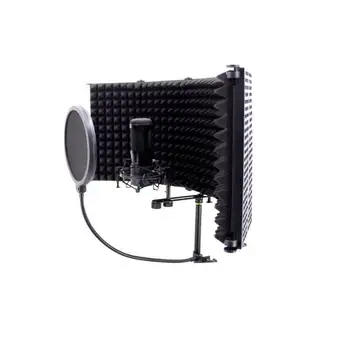
MICROPHONE ISOLATION SHIELD UNDER $20.
----------------------------------------------------------
Too many times as artists we feel uncomfortable even embarrassed when we push the vocals too far. If you take
a look at many of the top hit songs over the years, you will find a lot of them had odd, even goofy sounding
parts in the vocals. Many times that goofy part is what sticks in the listeners minds. Have you ever seen a friend
or someone singing along to a song being played, and then when they get to the goofy part, they really
emphasize it as though they were waiting just to sing that word or part? Their face lights up, it seems to lift their
spirits, to arouse an emotional reaction in them. You will never see someone emphasize a word in the center of
a verse that is the same volume or pitch as everything else. Sometimes it is good to go over the edge of your
comfort level, to get your song to stand out from the rest in people's minds. You will be considered to be a
better singer for it. A home studio, with nobody else at home, is the ideal environment to experiment and let
it go, loud and over the top. That could be your answer to the question, how to write a hit song,
Try listening to some of your favourite songs and pay close attention to how they end each verse. Do they go
down in pitch at the end of the first and third verse, and up in pitch at the end of the second and fourth verse?
Are the first, second and fourth verses the same, and every third verse changes? Does every verse have a little
different twist at the end or near the end of it? Are the first two verses sung the same, and the last two sung
harder and or higher? These are all techniques and singing tips used on many hit songs and top album songs,
by top singers over the years.
Now listen to your song again. Is it changing or is it pretty well all the same? Try varying it to some of the
different ways, or all of the different ways listed above. See what fits. Try putting a new spin of your own on it.
There is no reason in the world that you, YES YOU, could set a new trend in vocal delivery. One that others will
follow and talk about many years from now.
Always remember the golden rule in singing vocals on a recording. SING IT LIKE YOU MEAN IT !
by Art Rock / MyCD
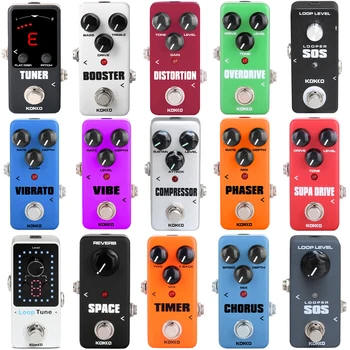
NEW GUITAR EFFECTS UNDER $10.
---------------
8] SONG INTRO IDEAS - by Art Rock MyCD.ca
One of the easiest and simplest intros is to play the same music as the verse. Sometimes artists will start with just
one of the instruments, such as the drums. Then the bass guitar starts, then the guitar and then any other
instruments in the band. Then they break into the first verse. Easy to do and sets the song up nice. It flows right
in smooth and easy. Over the years artists from many different styles of music have used a spacey synthesizer
sound for the intro. Songs like "Fly Like an Eagle" by the Steve Miller Band, "Lunatic Fringe" by Tom Cochrane and
Red Rider to "In The Light" by Led Zeppelin. Another method, the one chord intro, is a very effective way to get your
song remembered in the minds of the listener. As soon as you hear that opening chord on the piano you instantly
recognize it as "Benny and the Jets" by Elton John. To pull this off try going through a chord book and try different
chords, especially the less common ones, that people do not usually hear. Try slow strumming it, then try playing it
fast and hard. On a piano or keyboard try playing the chord one note at a time, then try comping it. Try playing them
different ways, and experiment to find something that is unique sounding and fits in to your song.
Another method for an intro to a song is to start with a solo vocal line. A perfect example is the Who's "The Real Me" .
"Can you see the real me can you, can you" followed by a powerful instrumentation that blows people away. They go
from a vocal only to the full power of the band. This sudden change from soft to hard makes listeners jump out of
their chairs onto their feet. Another method of intros that is frequently used is to start the song with the chorus. This
is very effective if you are a new unknown artist or band, with a very strong chorus. It will keep the listeners from
changing the channel on the radio or get up and leave when you start playing live. Many listeners unfairly label an
unknown act as garbage. This is a stigma every new band has to accept and get over. In this situation a strong
chorus will pull them in as soon as you start your song. Another approach to an intro is to use some type of
gimmicky sound effect. When you hear the guitar string bending you know it's "Iron Man" by Black Sabbath.
When you hear the harmonica playing you know it's "The Wizard" by Black Sabbath. When you hear the
helicopter you know that is "The Happiest Days of our Lives" by Pink Floyd. The above methods will give you lots
of ideas on different types of song intros. Try to come up with something unique, different that hasn't been
done before.
Think outside the box. Be a trend setter, not a follower. You are the only one who is limiting yourself.
article by Art Rock / MyCD.ca
-----------------------------------------------------------------------------
 $
$
$
$
-----------------------
9]
WHAT IS A MEASURE,
WHAT IS A BAR IN MUSIC-
by Art Rock - MyCD
They are the same as far as time or length goes. The term "measure" is
usually referring to the distance or
space between the bars on the music staff. To make it easier to
visualize what a bar or measure is, tap your
foot as though you are listening to a song. Tap your foot at about one
second per tap or a little faster.
Four foot taps, or beats, as they would normally be called, would equal
one measure or bar. When writing this
on a blank, lined manuscript page, you would draw a bar, a vertical line
at the end of every four foot taps
or beats. When you hear the term an eight bar verse, that means you
would be tapping your foot 32 times.
[ 8 X 4]. If it were a 16 bar verse, you would be tapping your foot 64
times. [16 x 4]
by Art Rocks MyCD
-----------------------------------------------------------
----------------------------------------------------------
|
Win Free Meds FancyMeds |
--------------------------------------
10]
HOW IS TEMPO, BPM CALCULATED
Going back to out toe tapping method, where
you tap your foot like you are listening to a song. If you were
tapping your foot every 3/4 of one second,
[0.75 sec] that would be 80 taps per minute, or 80 beats per
minute [BPM], as it is normally called, the
number of beats per minute, which is what the letters "BPM"
stand for. We calculated this by taking 60
seconds in a minute, divided by 0.75 seconds per tap, equals 80.
Therefore it would be 80 BPM. If the beats
were 1 second apart it would be 60 BPM.
[ 60 seconds divided by 1 second = 60 ]
by Art Rock MyCD
------------------------------------------------------------------------
NEW - 11]
HOW DO YOU FIGURE OUT HOW
LONG THE SONG WILL BE?
If we had an 8 bar verse, that was 8 bars or
measures, of 4 beats each, and the beats were 0.75 seconds
per beat, which we used to calculate our 80
BPM, [60 SECONDS DIVIDED BY .75 = 80]. This 32 beat long
verse, would be 32 X .75 sec = 24 seconds
long.
So if we did an ABACAB song form, [Verse,
Chorus, Verse, Bridge, Verse, Chorus], and we made each verse,
chorus and the bridge, the same 8 bars, 24
seconds long each, we would have a song that is 6 x 24 seconds
which is equal to 144 seconds or 2 min 24 sec
long. If we did a 3 chorus, ABABCAB song format,
[ V1, Ch1, V2, Ch2, bridge, V3, Ch3 ] we
would have a song that is 2 min 48 sec long. [7 X 24 sec= 168 sec]
Now a days that would be fine. Shorter songs
are favoured by many playlist curators, as the attention span
of listeners is shorter now in the days of
everything quicker. But if you want your song to be more of a
work of art, or just a little more complex,
you may want an intro, maybe a pre-chorus, maybe a lead guitar
or instrumental break, maybe an outro/
ending. If you did half the length of the verse, 4 bars instead of
8, which would be 12 seconds long, on the
intro, each pre-chorus and the ending, with no lead break,
our ABACAB song would be 3 min 12 sec [144
sec + intro 12 sec + pre-chorus +12s, +12s + outro/ending
+12 seconds = 192 seconds = 3 min 12 sec ].
The 3 verse song, ABABCAB, would be 3 min 48
sec [168 sec + intro 12s, + pre +12s, +12s, +12s, + outro/
ending + 12s = 228 seconds] If you want more
words to tell your story and double the verse lines by
doubling the bars, you would add 24 seconds
to each verse. If you made the chorus the same length, you
would add 24 seconds to each chorus as well,
and 12 more seconds to the bridge and intro. Now your song
is getting long, maybe too long, over 6
minutes. So, if you want to shorten your song length, you could
sing 1 verse per bar, if you were doing 1
verse per 2 bars. Thereby the time length of the verse stays the
same, even though you doubled the lines.
However you will sacrifice breathing space in the vocals, and
will have to sing faster, which will
substantially change the vibe of the song, maybe better, maybe not.
Or you could increase the tempo. If we go
from 80 BPM TO 120 BPM [60 seconds divided by 120 BPM =
0.5 seconds per beat X 32 beats = 16 seconds
for each verse instead of 24, or 32 sec [16 sec x 2 ] for
a double verse. So our ABACAB with double the
verse, and if we doubled everything, the chorus, intro,
pre-chorus and ending would give us a song
that is 4 min 16 sec. [ 3 verse, 2 chorus, 1 bridge = 6 X 32sec
= 192 sec, + 1 intro, 2 pre-chorus & 1 ending
= 4 X 16 = 64 sec = 256 sec = 4 min 16 sec]. Although, the
song is going to be a lot faster.
That is how you calculate it. You have to
decide if you want a shorter song, what are you going to cut.
If you are doing a progressive rock song you
have no worries. They usually are always much longer songs.
by Art Rock MyCD
INDEX



$ $

| STUDIO MICS SALE AT AMAZON |


More free articles on these pages - PICK A TOPIC
[
 ]
]






The page you are on is shown in brackets [ SONGWRITING ]
Any prices displayed were the price at the time the ad was placed, subject to change. If you click on the ad you will see the current discounted price.
Privacy Policy
We do not utilize cookies or collect any data on anyone visiting our site, although
your personal internet provider, your browser, your social media
accounts, google, any sites or ads you clicked on, probably will and may follow
you to, and through our site, as well as every other site you visit, as well as
any ads you click on.
We do not ask for or collect any information on our site visitors.
As an Amazon Associate I earn from qualifying purchases
copyright Absolute Music 2006, 2011, 2012, 2013, 2014 ,2020, 2021, 2022, 2023, 2024, 2025, 2026 All rights reserved
This is the Official Homepage of MyCD.ca
This is the Official Homepage of AbsoluteMusic.ca Hamilton, Ontario Canada
Contact web @ MyCD.ca
WARNING: YOU HAVE REACHED THE END OF THE INTERNET. WATCH THAT YOU DO NOT FALL OUT OF YOUR CHAIR